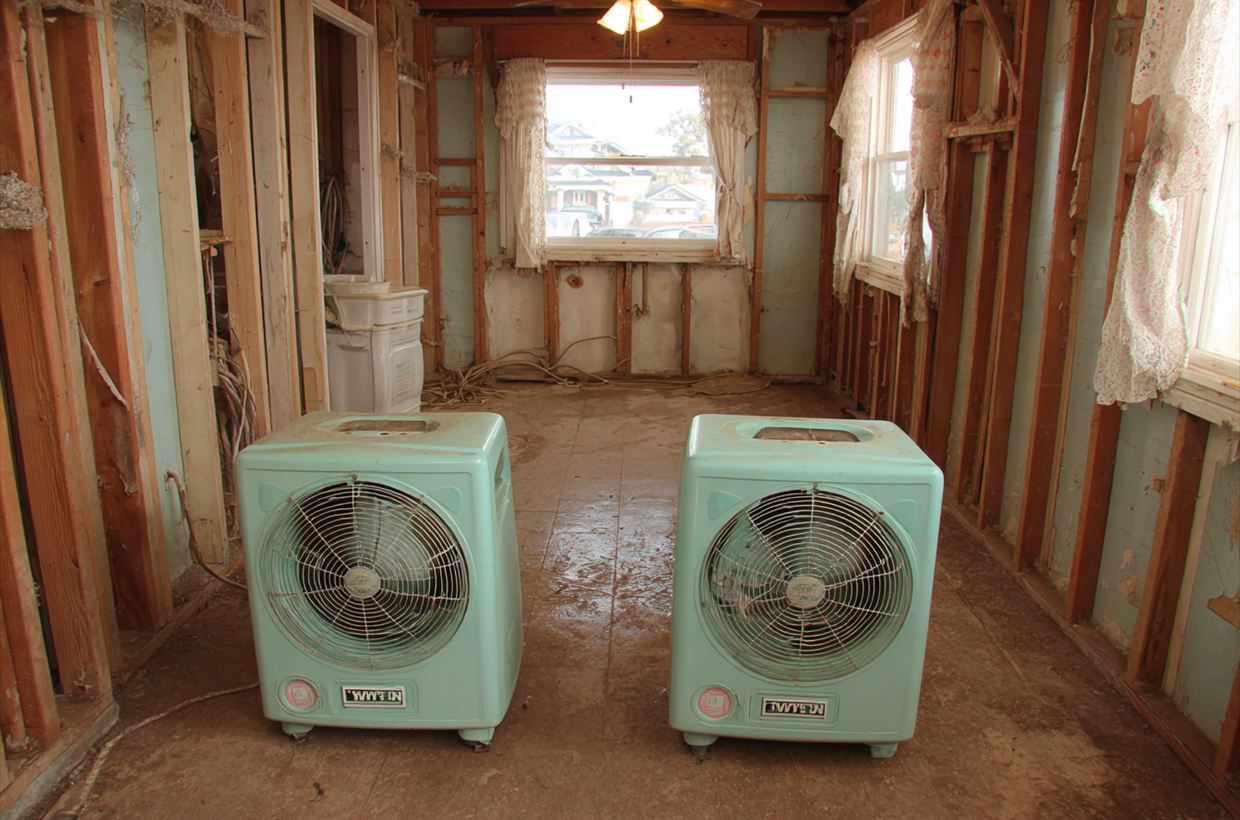
A leak that might dry out in a few days in a dry climate can take noticeably longer in Baytown. The reason is the air. Drying works by moving moisture out of wet materials and into the air, then out of the air. When the air in and around the house is already holding a lot of water, as it usually is on the Gulf Coast, that process slows down. Here's what that means for a water damage job.
The Basics of Drying
| Step | What it does |
|---|---|
| Extraction | Removes standing and soaked-in water |
| Air movement | Sweeps air across wet surfaces so moisture evaporates |
| Dehumidification | Pulls that moisture out of the air so drying can continue |
| Readings | Show when materials are back to normal |
On the Gulf Coast, the third step does the most work.
What Humidity Changes
- Open windows don't help. Outside air is often as humid as the house, or more.
- Dehumidifiers carry the load. Restoration companies rely on them more heavily here.
- The AC matters. Running the air conditioning helps keep indoor humidity down while equipment runs.
- Slabs dry slowly. Concrete holds moisture, and in humid air it gives it up gradually.
- Salt makes it worse. After bay water, salt in materials keeps drawing moisture back. See saltwater in the house.
How You Know It's Dry
Not by touch, and not by how it looks. A restoration company takes moisture readings on the framing, drywall, subfloor or slab, and compares them with a dry area of the same house. If the numbers match, the material is dry. If the readings are still high, drying continues, even if the surface feels fine. Closing up a wall or laying new flooring before that point traps moisture.
Living With the Equipment
- it runs constantly and it's loud
- it warms the room; the AC works harder
- keep doors and windows closed unless the company says otherwise
- don't move or switch off equipment without asking
Typical Timelines
There's no fixed number of days. A small clean-water leak caught early may dry in several days. Flood water, a wet slab, or walls that sat wet for a long time can take longer. The repair stage waits on the readings: drywall, ceiling and floor repair.
Summer vs. Winter Drying
Drying is usually fastest in the drier, cooler months and slowest in the heat and humidity of summer, which is also hurricane season. If a storm leaves the house wet in August or September, expect the equipment to run longer than it would for the same leak in January. The readings decide either way, but the season changes how long it takes to get there.
The AC Is Part of the Drying
In a Baytown house, the air conditioner does more than cool. It pulls moisture out of the indoor air, which helps the dehumidifiers. If the restoration company asks you to keep the AC running, that's why. Keep the thermostat at a normal setting, change a filter that got dusty during demolition, and keep the AC drain line clear so it doesn't add its own leak to the job.
Questions
Why does my house still smell damp after the leak was fixed?
Materials may still be wet inside even though surfaces look dry. Readings will show it.
Should I open the windows to dry things out?
Usually not on the Gulf Coast. Humid outside air slows drying.
How long does drying take in Baytown?
It depends on the water, the materials and how long they were wet. Readings decide, not the calendar.
Around Baytown
Humidity is the same everywhere here, and it matters as much in newer homes in Mont Belvieu as in older ones in Pelly. Without power, it's harder still: drying a house when the power is out.
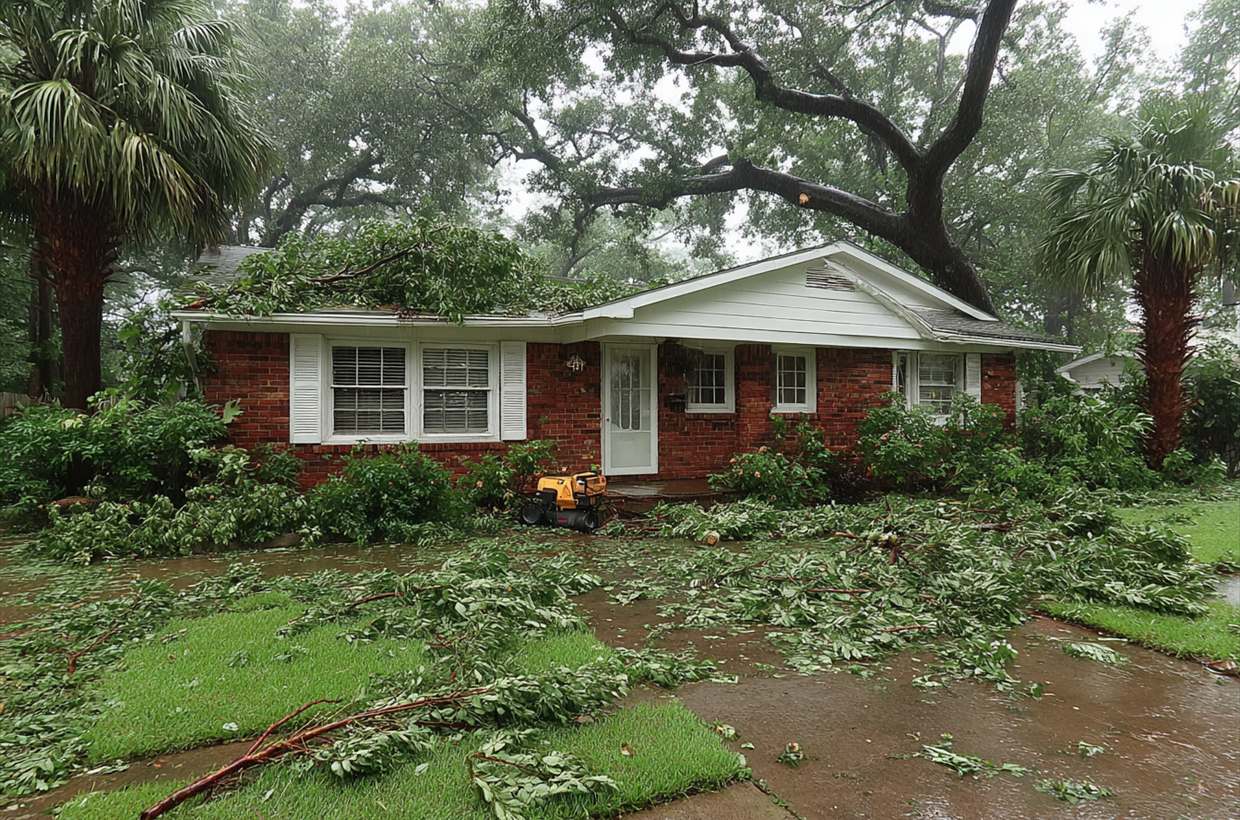
Drying a House When the Power Is Out After a Storm
What a wet house needs when the grid is down.
When the Gulf Coast Freezes: Pipes in Exterior Walls and Attics
The rare hard freeze, and the leaks that show up when it thaws.