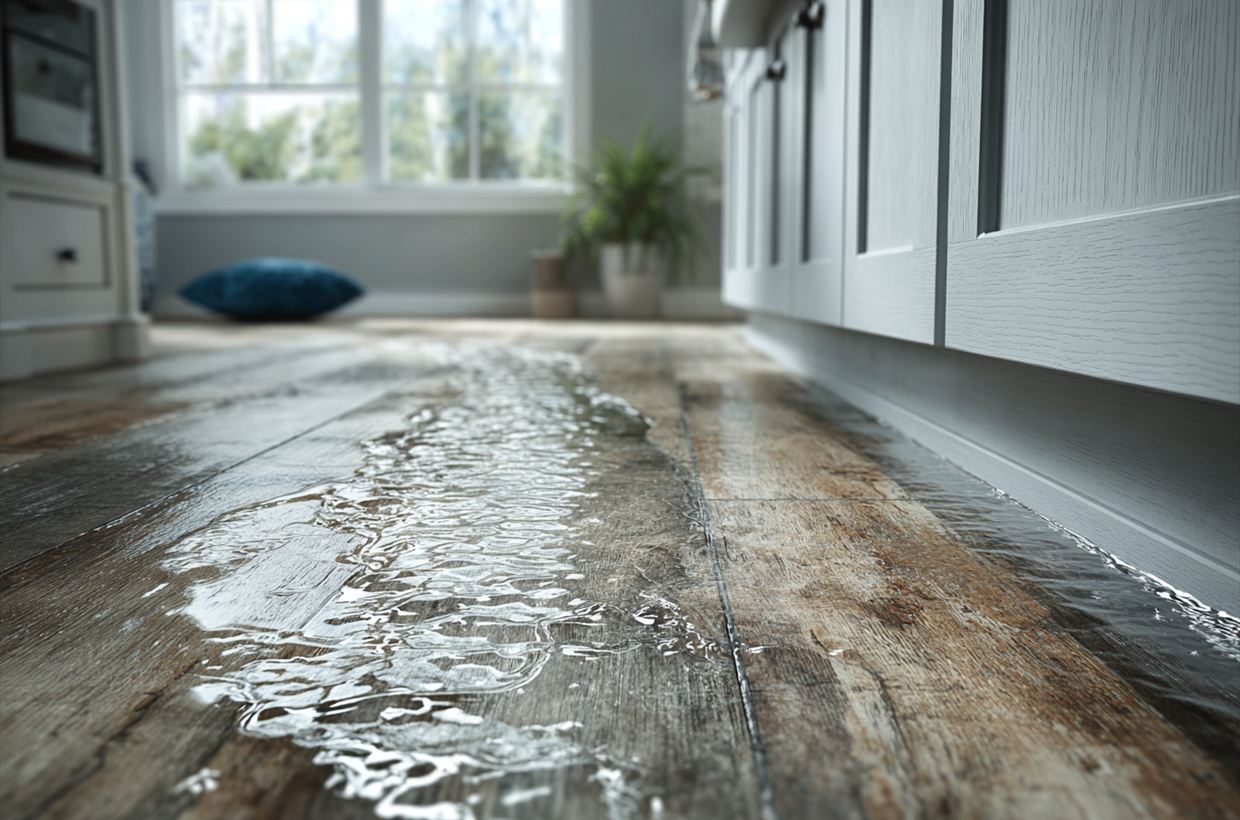
House Water: Where It Comes From
Not every Baytown water damage call follows a storm. Most days it's water from inside the house: a supply line behind a vanity, a slab leak, a water heater that finally gave out, an AC condensate line that clogged, or a washer or fridge line. If the water started inside, it's usually clean at first. On a slab, though, it spreads under flooring and into the walls faster than people expect. The water damage work is the same whatever the source: stop it, get it out, dry the structure with readings, then repair. Repairing the leak itself is separate from drying the house.
Foundation Water Damage From a Slab Leak
A slab leak is a leak in a water line under or inside the concrete slab. If you notice these together, suspect one:
- a warm or damp spot on the floor
- the sound of running water when everything is off
- a water bill that climbed without a reason
- baseboards or flooring that stay damp with no visible source
- cracks or lifting in tile or laminate in one area
The water damage side is drying the slab and everything resting on it: flooring, baseboards and the bottom of the walls. Readings on the slab show how far it spread.
Water Heaters and AC Drains
If the water heater is leaking, shut off its water supply and, for a gas heater, its gas valve if you know how; otherwise leave it and call the utility for gas questions. A heater that leaks in a garage or closet usually wets the wall behind it and the floor around it. If water is dripping near an AC vent or the air handler, switch the system off at the thermostat. A clogged condensate line or an overflowing pan can soak a ceiling or a closet floor. The water damage is what a restoration company dries and repairs.
Washers, Dishwashers and Fridge Lines
- Washers: burst supply hoses send a lot of water fast; slow drips from the valve box go unnoticed.
- Dishwashers: a failing connection swells the floor in front and the cabinet beside it.
- Fridges: ice-maker lines crack behind the fridge, and the floor under it takes the water.
If you find water from any of these, close its valve (or the main), pull the plug only if you're standing somewhere dry, and get pictures.
When Pipes Freeze
Hard freezes are rare here, but when they come, pipes in exterior walls, attics and garages are the ones that split. The water often shows up when the ice thaws. More: when the Gulf Coast freezes.
What Are the Signs of a Slab Leak?
A warm spot on the floor, the sound of water with every fixture off, a rising water bill, and damp flooring or baseboards with no visible source. Any one of these can have another cause; two or three together point to a slab leak. Meters on the floor and walls show where the water has spread.
Water Inside the Walls
Pipes hidden in a wall can drip unnoticed for a month or more. Watch for paint that blisters, base trim that gives under your thumb, carpet that's damp at the edge for no reason, or a stale smell that stays in one spot. Expect the lower drywall to be opened so air can reach inside.
The First Few Things You Can Do
- if water is still flowing, close the main valve
- avoid outlets, cords and the breaker box near any water
- lift small things off the wet floor
- take pictures of each wet spot
Upstairs Bathrooms and Laundry Rooms
Plenty of newer houses around Baytown and Mont Belvieu put the baths and the washer upstairs, over living rooms and kitchens. If a stain appears in a downstairs ceiling, the source is often directly above it: a toilet seal, a shower drain, a supply line or a washer hose. Water tends to follow the joists for a while before falling, so the stain may show up a few feet away from the fixture. The plywood upstairs and the ceiling downstairs both get readings and drying.
Leaks You Don't See Until Later
Slow leaks do as much damage as fast ones, because they run for weeks. If you notice a musty smell, a soft spot in the floor near a fixture, or flooring lifting at the seams, there may be a leak behind a wall or under the slab. A restoration company's meters and thermal camera show how far the water went, so the drying covers all of it, not just the spot you can see.
Leak Water Damage Around Baytown
West
- Old BaytownBaytown
- Goose CreekBaytown
- PellyBaytown
- LakewoodBaytown
- La PorteHarris
- SeabrookHarris
- ChannelviewHarris
East
- Cedar BayouBaytown
- Mont BelvieuChambers
- CoveChambers
- Beach CityChambers
- Old River-WinfreeChambers
- AnahuacChambers
North
Flooding and storm water live on the Baytown water damage restoration page.