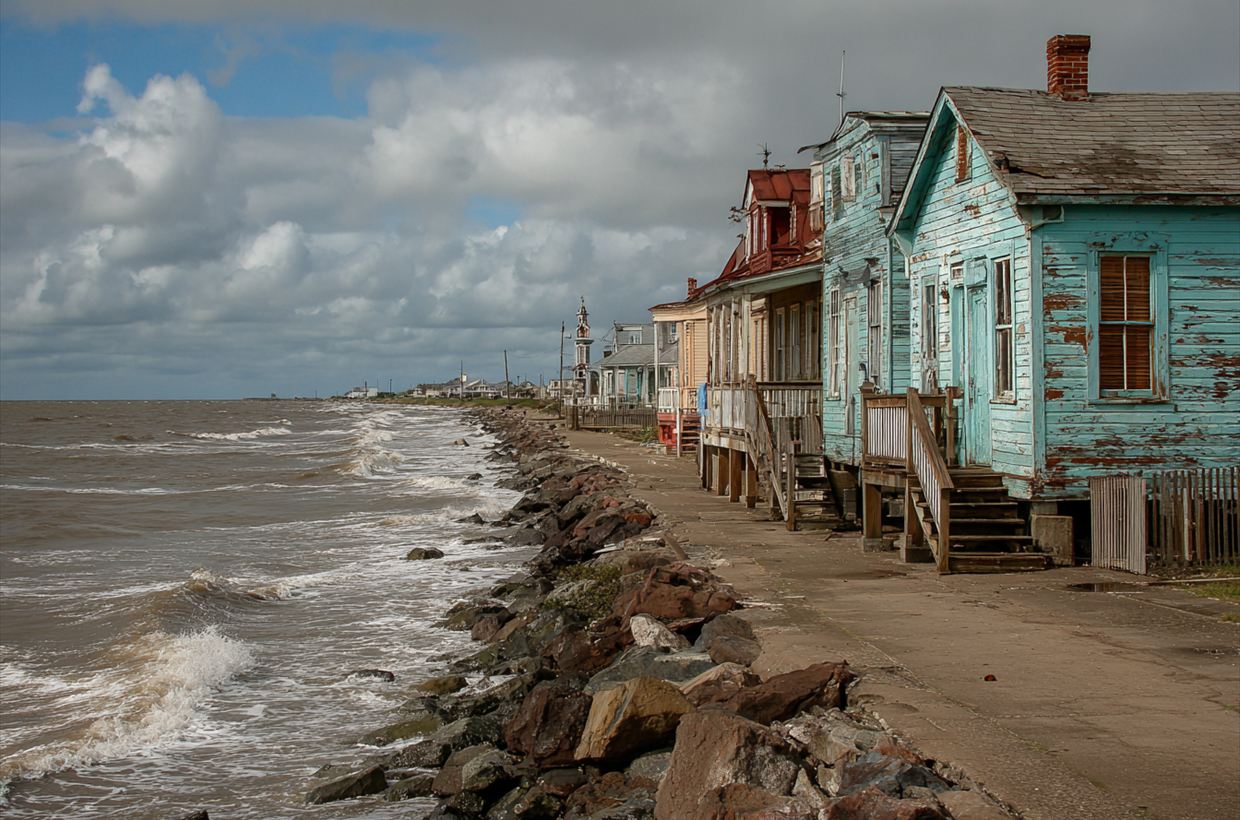
Bay water isn't just flood water. When surge from Galveston Bay or Trinity Bay comes into a Baytown-area house, it brings salt, and salt doesn't leave when the water does. It stays in drywall, insulation, wood and concrete, and because salt pulls moisture out of the air, salty materials can stay damp in Gulf Coast humidity long after everything else has dried. That changes the cleanup.
What Salt Does
- Draws moisture: salt-laden drywall and wood keep absorbing water from humid air.
- Corrodes metal: nails, screws, outlet boxes, appliance parts and heating and cooling components corrode faster.
- Leaves residue: a white crust can appear on concrete and masonry as it dries.
- Slows drying: moisture readings can stay high where salt remains.
What Usually Stays and What Usually Goes
| Material | After bay water |
|---|---|
| Carpet and pad | Removed |
| Drywall | Cut above the water line and replaced |
| Wall insulation | Removed and replaced |
| Wood framing | Usually stays; cleaned and rinsed of salt, then dried |
| Concrete slab | Stays; cleaned, rinsed and dried |
| Tile | Often stays after cleaning |
| Particleboard cabinets | Removed |
| Solid wood cabinets and doors | Sometimes saved after cleaning and drying |
| Appliances and heating or cooling parts that sat in salt water | Need checking by the right professional before use |
Why Cleaning Comes Before Drying
If salt is left on framing and the slab, drying equipment just moves moisture around it. A restoration company cleans the exposed surfaces to get the salt off, then sets drying, then takes readings. Expect drying to take longer than after a fresh-water leak.
Before Anything Moves
- wait for officials to say it's safe to return
- keep the electricity off in flooded rooms until it's been declared safe
- wear boots and gloves; surge water isn't clean
- photograph every room, the water line and damaged belongings
- call your insurers and a restoration company
The Insurance Side
Surge is rising water from outside, which is a flood-policy matter in most cases. Wind damage that came with the same storm may go to a windstorm policy. See windstorm, flood or homeowners. Surge versus rain flooding is covered in storm surge vs. rain flooding.
The American Red Cross has a flood safety guide for returning home after a flood.
Belongings After Bay Water
Salt is hard on belongings too. Upholstered furniture, mattresses and anything made of particleboard that soaked usually can't be saved. Solid wood furniture may be cleaned and dried, but it can stain or warp. Photographs and papers can sometimes be rinsed in clean water and dried flat. If you're not sure, photograph it and set it aside for the adjuster before throwing it out.
Cars, Garages and Outdoor Equipment
Salt water is hard on anything mechanical. Cars, lawn equipment, outdoor AC condensers and pool equipment that sat in surge water may be damaged even if they look fine once dry. If it sat in bay water, have it checked before starting it, and photograph it for the insurer. Those items usually fall under different coverage than the house itself.
Questions
Why does drywall stay damp after bay water?
Salt in the drywall pulls moisture from the humid air, so it keeps reading wet.
Can framing that sat in bay water be saved?
Usually, after it's cleaned of salt and dried with readings.
Is saltwater damage covered differently from flood damage?
It's flood water for insurance purposes in most cases. The cleanup differs more than the coverage does.
Along the Bay
Bay water is most likely in Lakewood, La Porte, Beach City and Cove. The cleanup order: flood and storm surge cleanup.
Windstorm, Flood or Homeowners: Which Policy Covers Which Water
The three policies, and why the county line matters.
Storm Surge vs. Rain Flooding
Two kinds of outside water, and why they're handled differently.