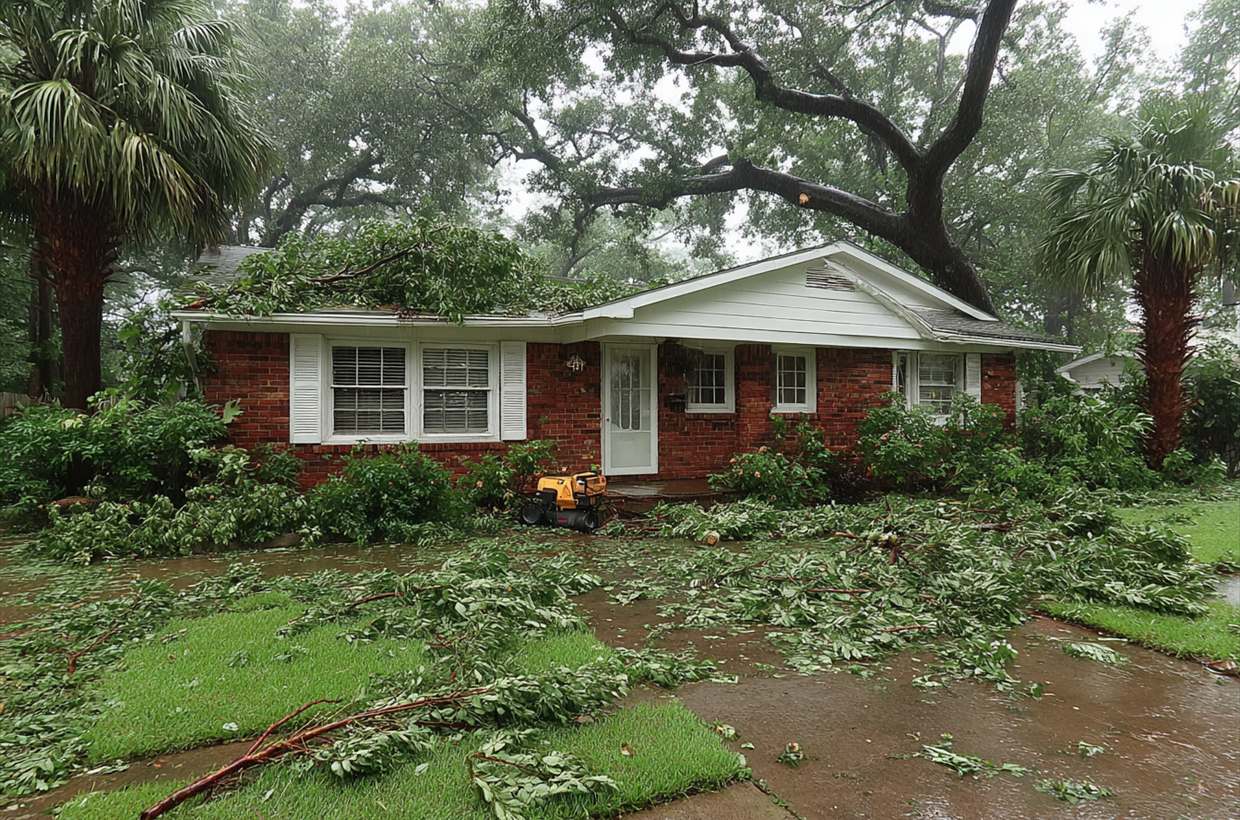
Gulf Coast storms often take the power with them, sometimes for days. If water got into the house, that's the worst combination: wet materials, no air conditioning, no dehumidifiers, and outdoor air that's already close to saturated. Every hour, wet drywall, carpet and insulation take on more moisture instead of losing it. This guide covers what matters first, what to avoid, and how drying gets started once equipment can run.
Why No Power Makes It Worse
- No AC: indoor humidity climbs to match the outdoors.
- No dehumidifiers: nothing is pulling moisture out of the air.
- Opening windows doesn't help: the outside air is humid too, and it may be raining.
- Time works against you: materials that could have been dried in place may need removal after days of sitting wet.
What Matters First
- Safety. Stay out of standing water near outlets and the panel. If the utility hasn't confirmed the power is safe in flooded rooms, keep it off there even after it comes back.
- Records. Take pictures of each wet room before anything is touched.
- Get the water out. Standing water and soaked carpet are the biggest moisture sources.
- Call. Storm weeks are busy for every restoration company in the area, and early callers get scheduled first.
What to Avoid
- Never run a generator indoors, in a garage, or near windows, doors or vents. Carbon monoxide kills people every storm season.
- Don't close up walls or lay new flooring over anything that hasn't been read dry.
- Don't run household fans on standing water or near wet electrical.
How Drying Starts Without the Grid
Restoration companies bring their own equipment, and after major storms some run it from generators placed safely outside. The order is the same as always: extract the water, remove what's ruined, open up wet walls, then set air movers and dehumidifiers with readings. If power is still out, the company will tell you what it can run and what has to wait.
When the Power Comes Back
- have the electrical in flooded rooms checked as safe before using it
- run the AC to start lowering indoor humidity
- let the restoration company place and run the drying equipment; don't move it
- expect readings on each visit; drying is done when they match dry areas
Gulf Coast humidity means this stage takes longer than elsewhere: why drying takes longer on the Gulf Coast. Preparing before the next storm: hurricane-season checklist.
Official Help
Ready.gov's power outage guide covers generator and food safety during long outages.
Heat, Humidity and Health
A closed-up, wet house in Gulf Coast heat is hard on people as well as materials. Indoor temperatures climb without AC, and humidity makes it feel worse. If you're staying in the house, keep to the driest rooms, drink water, and leave if the heat becomes dangerous, especially for older people, small children and pets. The drying can wait for the power; people shouldn't.
Food, Water and the Refrigerator
A long outage brings its own water problem: the refrigerator and freezer. As they warm, ice melts and runs out onto the floor, often unnoticed in the dark. If the power has been out for more than a day, check the floor in front of the fridge and freezer, empty spoiled food, and dry any water before it soaks under cabinets or flooring.
Questions
How long can a wet house wait without power?
Every day matters. Materials that sit wet in Gulf Coast heat absorb more moisture and are more likely to need removal.
Can I use a generator to run fans?
Only with the generator outside, well away from the house. Don't run fans on standing water.
Will a restoration company bring its own power?
Some do after major storms. Ask what equipment they can run.
Where Outages Last Longest
Long outages hit hardest in Highlands, Old River-Winfree and Dayton. Storm rain damage: hurricane and storm rain damage.
Why Drying Takes Longer on the Gulf Coast
Humidity, air conditioning and the readings that decide.
Before Hurricane Season: A Slab-Home Checklist
The records and preparations that help most later.