What Water Restoration Companies in Baytown Do First
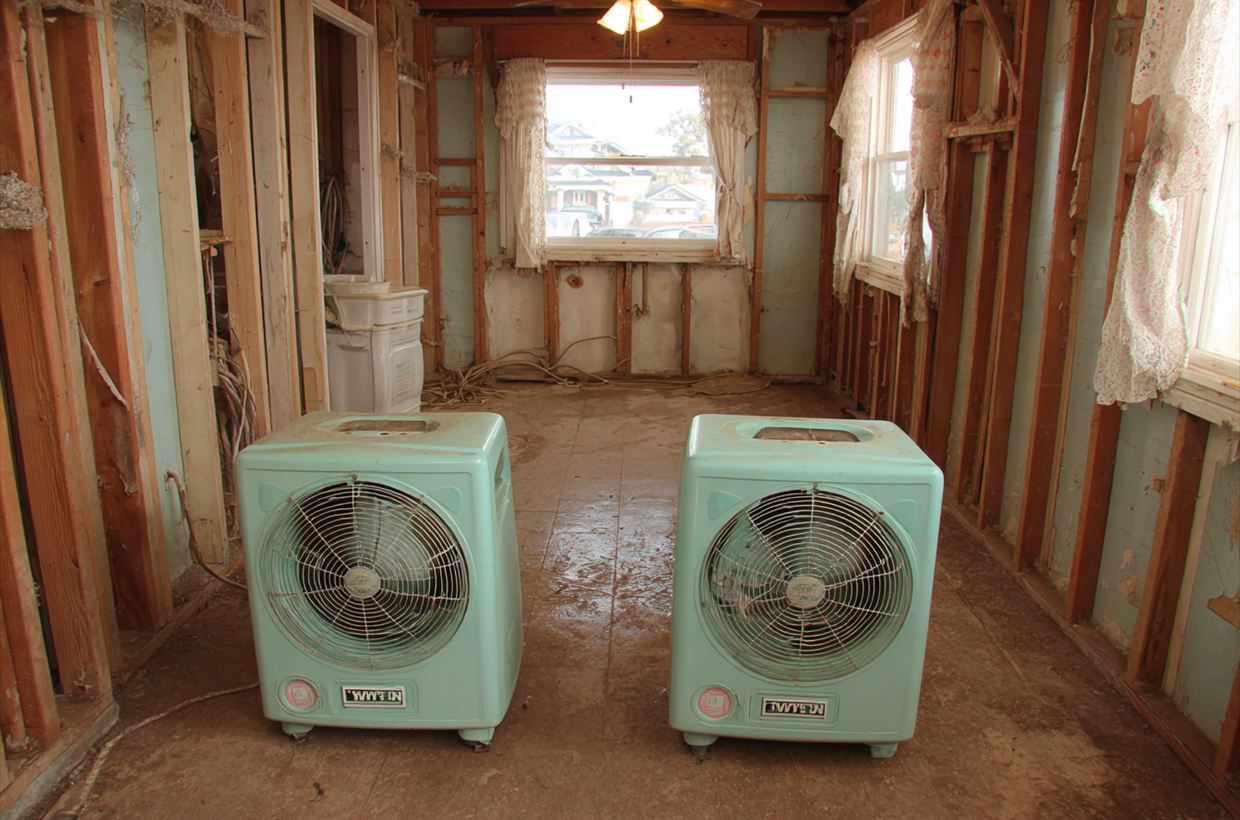
Water restoration companies work in two stages. Mitigation comes first: stopping the source, extracting the water, opening up what's soaked and drying the structure until the readings say dry. Restoration comes second: replacing what came out and putting the rooms back. If you remember nothing else, mitigation is the part that keeps the damage from growing. It's also why speed matters, even though nobody can promise when a crew arrives. In a Baytown house on a slab, mitigation usually means pulling water out from under flooring and drying wall bottoms. After a storm, it can mean a whole floor of wet materials.
Restoration, Mitigation, Remediation
- Water mitigation: stop the source, protect what's still dry, extract water and set drying equipment.
- Water remediation: remove and clean the materials the water ruined: pad, drywall, insulation, baseboard.
- Structural drying: air movers and dehumidifiers on a plan, with readings on each visit.
- Restoration and repair: drywall, texture, paint, trim, cabinets and floors going back.
Companies use these words differently on their paperwork. If a line on the bill isn't clear, ask what it covers.
The Job in Five Blocks
- Stop and protect. Water shut off where possible, power checked in wet rooms, furniture moved or blocked up, photos of everything as found.
- Extract. Pumps for standing water, extractors for carpet and hard floors.
- Open up. Drywall that wicked water is cut low; wet insulation and pad come out.
- Dry. Equipment set where the readings say, with readings compared to a dry room each visit.
- Rebuild. Only after the readings match. See drywall, ceiling and floor repair.
Drying a House on the Gulf Coast
If the air outside is already wet, opening the windows doesn't help. Baytown's humidity means drying depends on dehumidifiers and air conditioning more than airflow alone. Equipment adds heat and runs constantly, and the AC works harder while it does. If the power is out after a storm, drying waits on generators or the grid, and wet materials keep absorbing moisture. More: why drying takes longer on the Gulf Coast.
What Happens First on a Mitigation Job?
Its first job is keeping the damage from growing. That means confirming the water is off, making wet rooms electrically safe, photographing the damage and taking moisture readings to find the edges of the water. Then it extracts and starts drying. If a company leads with new flooring before it has readings, the order is backwards.
How Long Does Restoration Take in a Humid Climate?
Drying a clean-water leak often runs several days. Slabs, wall cavities and flood jobs take longer, and Gulf Coast humidity adds time. Repairs follow, so the whole job can stretch into weeks when a lot of material came out. The drying is done when readings match dry areas of the house, not on a set day.
What Usually Stays and What Usually Goes
| Material | After a clean-water leak | After flood or surge water |
|---|---|---|
| Carpet pad | Usually replaced | Replaced |
| Carpet | Sometimes dried in place | Replaced |
| Laminate | Usually replaced | Replaced |
| Tile on slab | Usually stays; the grout and slab are dried | Usually stays after cleaning |
| Drywall | Often dried or cut low | Cut above the water line |
| Wall insulation | Replaced if wet | Replaced |
| Particleboard cabinets | Often replaced if swollen | Replaced |
Paperwork to Ask For
- photographs of the damage before work began, and of everything removed
- a written scope with rooms, materials and the drying plan
- moisture readings from the first visit to the last
- an equipment log
- a final reading before the walls close
If there's an insurance claim, these are what the adjuster will ask for.
Cost
The company prices the job after it sees the damage. The water source, how far it spread, the materials and the drying days move the number most. See what changes the bill.
Restoration in Hurricane Season
If a storm has just passed, the job changes shape. Instead of one wet room, there may be a whole first floor, a ceiling and a garage, all wet at once, and the house may be without power. Restoration companies triage the same way every time: make it safe, get the standing water out, take out what can't be saved, then start drying as soon as equipment can run. Neighbors on the same street often need the same work in the same week, so a company may set drying equipment first and come back for the rebuild later. Keep the photos and readings from each visit; after a hurricane, more than one insurer may want them.
Why Slab Homes Need Readings
Most Baytown houses sit on concrete. If water reached the floor, it spread under laminate, vinyl and tile, and the slab itself absorbed some of it. That moisture doesn't show. A restoration company reads the slab in a grid across each wet room and along the walls, marks where the water stopped, and dries to those lines. New flooring goes down only when the slab reads dry; otherwise the moisture comes back up through it.
Restoration Around Baytown
West
- Old BaytownBaytown
- Goose CreekBaytown
- PellyBaytown
- LakewoodBaytown
- La PorteHarris
- SeabrookHarris
- ChannelviewHarris
East
- Cedar BayouBaytown
- Mont BelvieuChambers
- CoveChambers
- Beach CityChambers
- Old River-WinfreeChambers
- AnahuacChambers
North
Every other page on this site branches off the Baytown water damage restoration page.