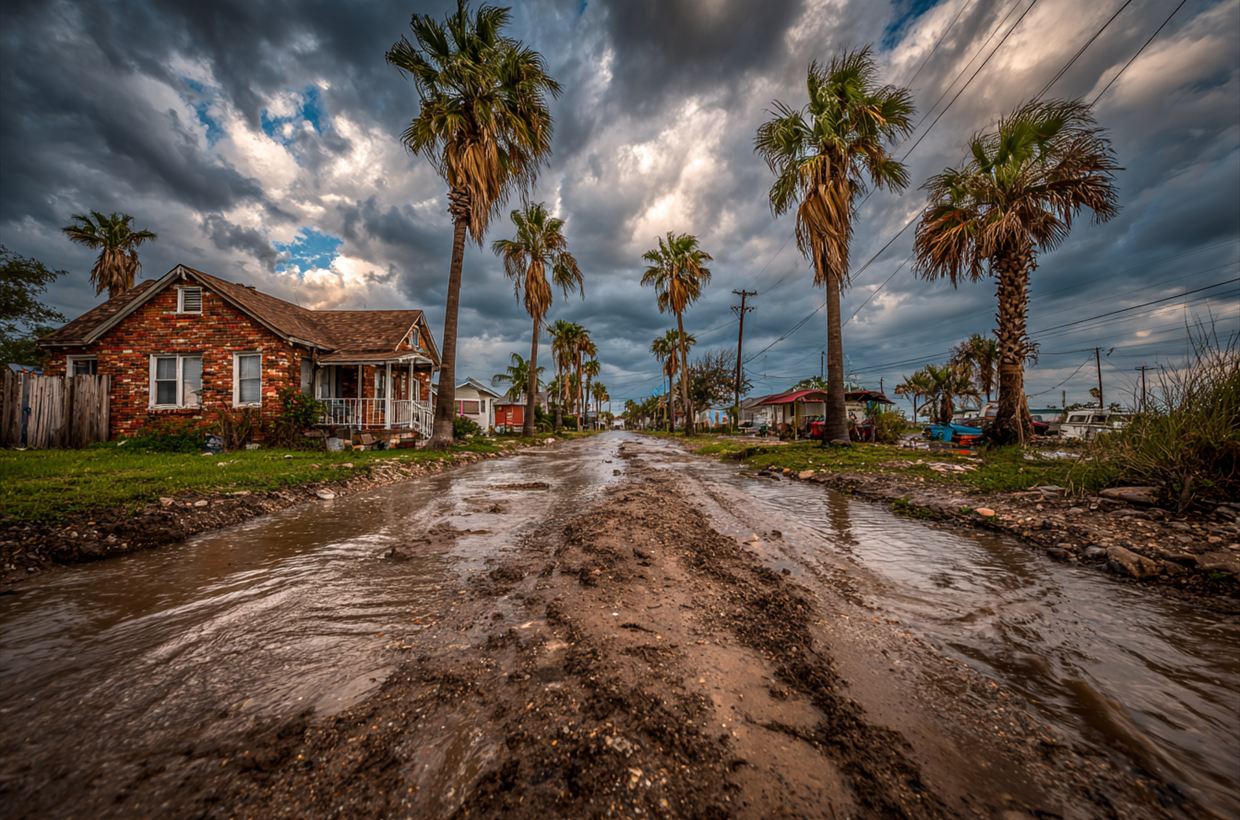
Around Baytown, "the house flooded" can mean two very different things. Storm surge is bay water pushed inland by a hurricane's wind. Rain flooding is water that fell on land faster than it could drain: bayous over their banks, streets turned into channels, yards that couldn't shed it. Both end up inside houses, and both are flood cleanups. But they arrive differently, leave different things behind, and hit different neighborhoods.
Side by Side
| Storm surge | Rain flooding | |
|---|---|---|
| Where it comes from | Galveston Bay and Trinity Bay | Rain, bayous, creeks and drains |
| When it comes | As a hurricane approaches and makes landfall | During and after heavy rain, sometimes days later |
| Who it reaches first | Bayfront and low-lying neighborhoods | Homes near bayous, creeks and low streets |
| How fast | Can rise quickly with the tide and wind | Can rise fast in a downpour or slowly as bayous fill |
| What it leaves | Salt, silt, marine debris | Silt, mud, yard and street debris |
| Typical warning | Hurricane and surge warnings from the National Weather Service | Flood watches and warnings, bayou gauges |
Why the Difference Matters Inside
If it was surge, the water brought salt with it. Salt stays in drywall, insulation, wood and the slab after the water leaves, and it keeps drawing moisture from humid air. That means more cleaning before drying, and sometimes more removal. See saltwater in the house.
If it was rain flooding, the water is fresh but contaminated by whatever it crossed. The cleanup is the standard flood order: remove what soaked, clean, dry with readings.
Either way, carpet, pad, insulation and the bottom of drywall usually come out, and hard surfaces are cleaned before drying.
Harvey and Ike: Two Examples
Hurricane Ike in 2008 was a surge storm for the bay communities, pushing water into low neighborhoods along the shore. Hurricane Harvey in 2017 was a rain storm: it stalled and flooded the region from the sky and the bayous. More on Harvey: Harvey at Cedar Bayou. Living beside the bayous is its own topic: Cedar Bayou and Goose Creek.
Knowing Your Exposure
- Bayfront and low lots: surge is the main threat.
- Near a bayou or creek: rain flooding is the main threat.
- Inland on higher ground: street flooding and wind-driven rain are more likely than either.
Check your address on FEMA's Flood Map Service Center, and follow the National Weather Service Houston/Galveston office for surge and flood warnings.
When Both Arrive Together
The worst Gulf Coast storms bring both kinds of water at once. Surge pushes up from the bay while heavy rain fills the bayous from the other direction, and the water has nowhere to go. Cedar Bayou is a good example: rain coming down meets surge pushing up near its mouth. If you live near where a bayou meets the bay, expect the highest water when both happen together, and follow both surge and flood warnings.
Which Kind Reached Your Street?
After a storm, neighbors often aren't sure whether the water was surge or rain. A few clues: surge arrives with the storm's approach and the tide, and leaves a salty film and marine debris. Rain flooding peaks during or after heavy rain, often hours later, and leaves fresh-water mud. If you're not sure, describe when the water came and from which direction; the restoration company and your insurer will sort it out.
Questions
Is storm surge covered by flood insurance?
Generally, yes. Surge is rising water from outside, which flood policies cover and homeowners policies usually exclude.
Can a house flood from rain without a hurricane?
Yes. Stalled storms and tropical systems can flood bayous and streets without a hurricane.
Is surge water worse than rain flood water?
Different, not always worse. Surge adds salt; both bring contamination.
Where Each Shows Up
Surge matters most in Seabrook, Anahuac and Cove; rain and street flooding in Channelview. The work itself: flood and storm surge cleanup.
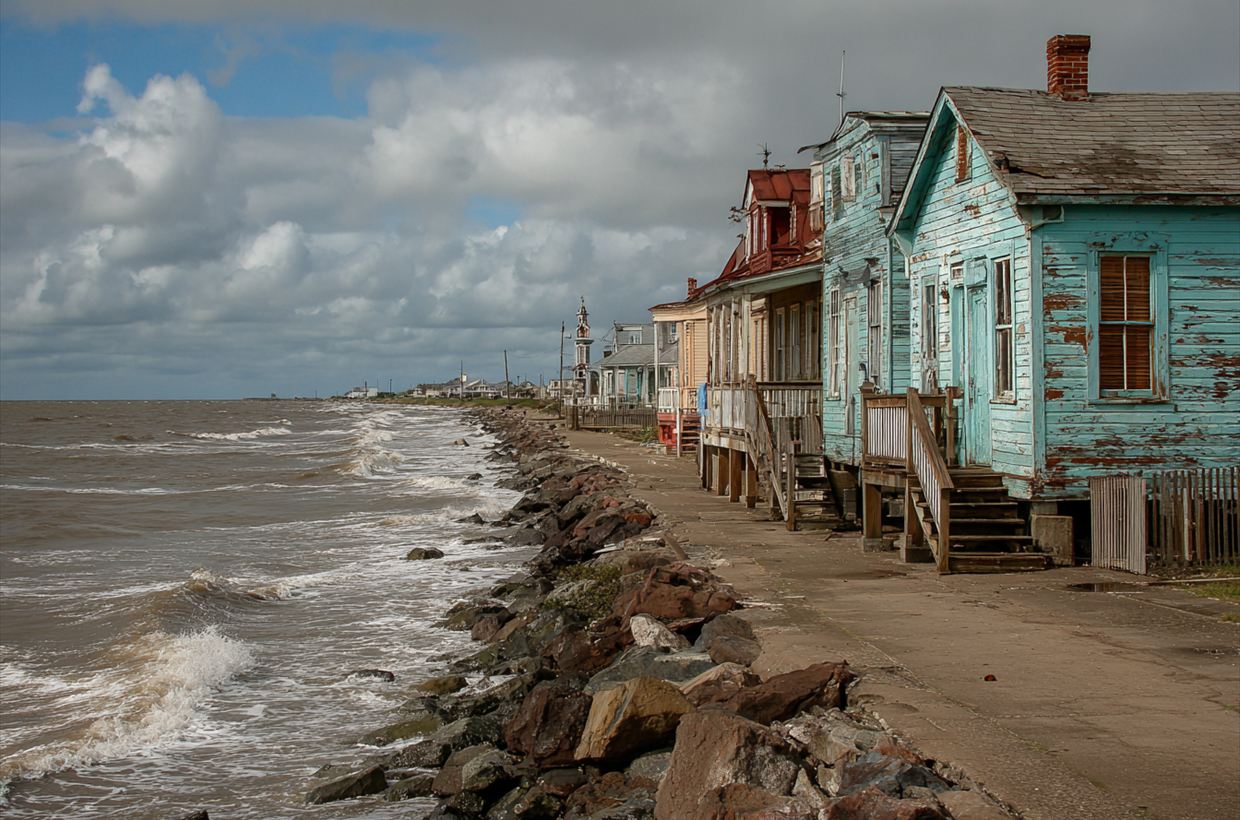
Saltwater in the House: What Bay Water Does Differently
What stays, what goes, and why salt matters.
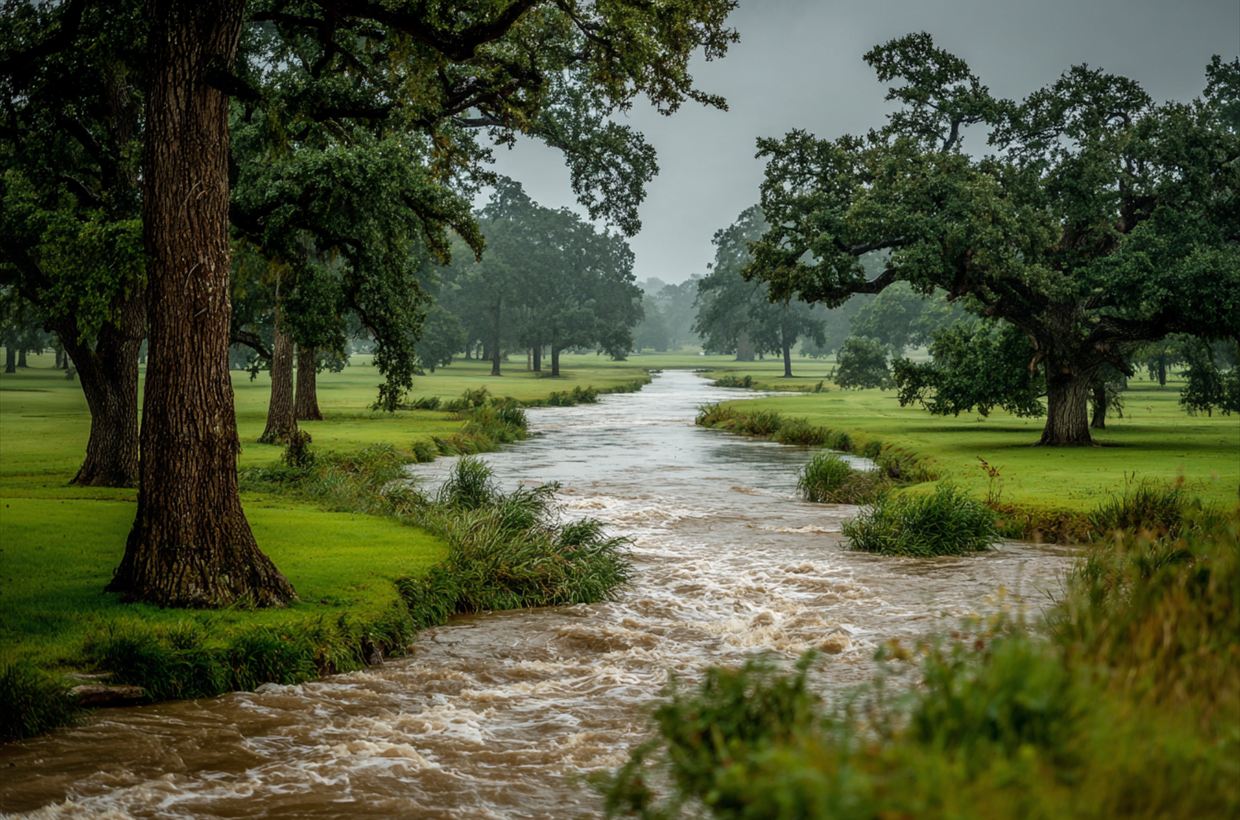
Harvey at Cedar Bayou: What Record Rain Did to Baytown
The storm that set a national rainfall record next door.