
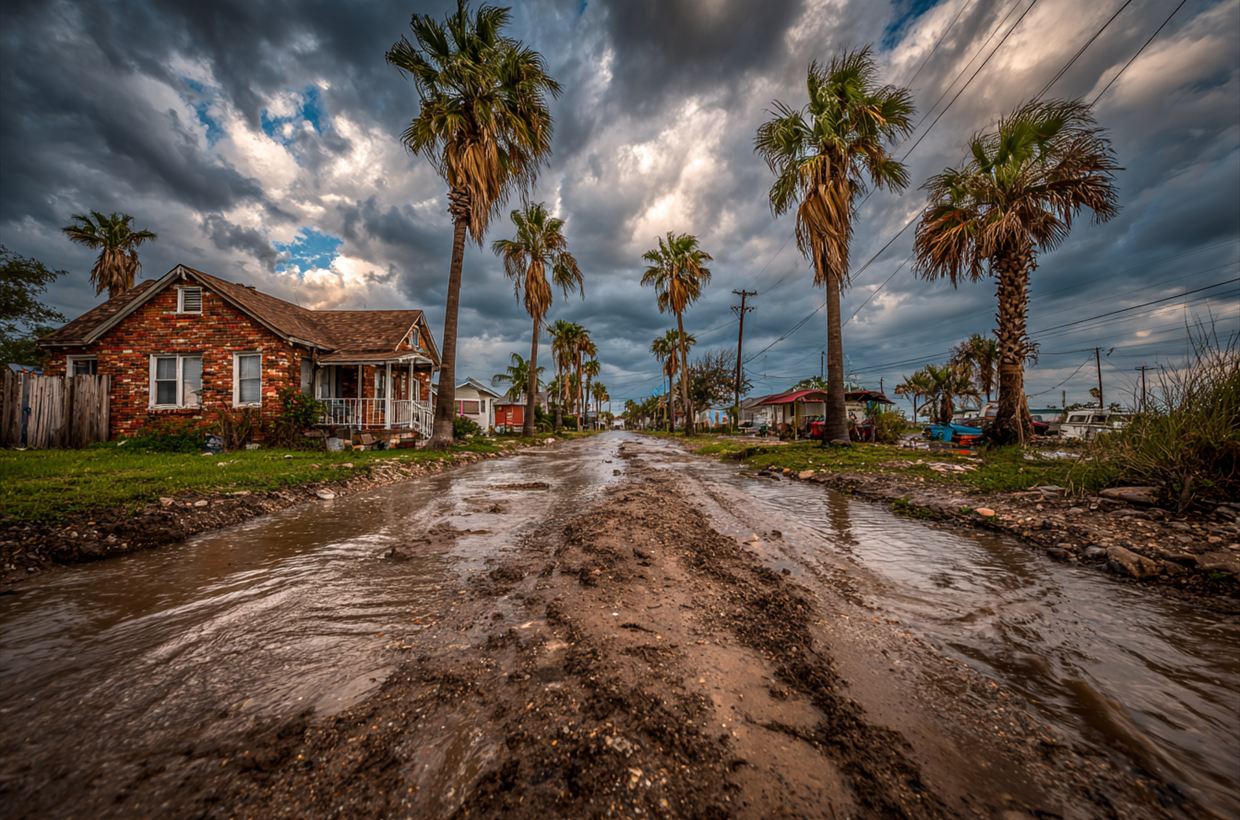
Hurricane Harvey stalled over Southeast Texas in late August 2017 and kept raining for days. A National Weather Service gauge on Cedar Bayou, near Baytown, recorded 51.88 inches from the storm, a record for a single storm in the United States. Harvey wasn't Baytown's first flood, and it won't be the last. It is the clearest example of what happens to Baytown houses when rain, not surge, is the problem.
Why Harvey Was Different
Most people picture hurricane damage as wind and surge. Harvey's damage around Baytown was mostly rain:
- It stalled. The storm sat over the region instead of moving through, so rain fell for days in the same places.
- The ground filled up. Once the soil was saturated, every inch ran off into ditches, bayous and streets.
- The bayous couldn't keep up. Cedar Bayou and Goose Creek rose over their banks into neighborhoods that had never seen water inside.
- Water stayed. On flat ground near the bay, flood water drains slowly, so houses sat in it longer.
What Rain Flooding Does to a House
If rain flood water came in, it behaves like any outside water:
- It carries silt, debris, fuel and yard chemicals, so porous materials it soaked are removed.
- It wicks up drywall well above the water line.
- It soaks carpet pad, insulation and particleboard furniture and cabinets.
- On a slab, it leaves mud across the floor and moisture in the concrete.
The longer it sits, the more of the house it reaches. That's why Harvey cleanups often meant cutting drywall at four feet, not two.
What Harvey Taught About Cleanup
- Order matters. Pump, muck out, remove, clean, dry with readings, then rebuild. Skipping the drying traps moisture inside new walls.
- Everyone needs help at once. After a regional flood, many houses on a street need the same work, so getting on a company's list early matters.
- Records matter. Photos taken before anything was moved, plus moisture readings, kept claims moving.
- Flood coverage is separate. Many homeowners learned their homeowners policy didn't cover rising water.
The Bayou Itself
Cedar Bayou is the eastern edge of Harris County, and its watershed covers nearly 200 square miles, including parts of Baytown and Mont Belvieu. Flooding there often combines rain coming down the bayou with surge pushing up from Galveston Bay. Harvey was mostly the first kind. More: living near Cedar Bayou and Goose Creek. Part of why some neighborhoods sit so low is subsidence: why parts of Baytown sit lower.
Watching the Rain Next Time
- the National Weather Service Houston/Galveston office for flood watches and warnings
- the Harris County Flood Warning System for bayou and creek levels
- the City of Baytown and Chambers County for local notices
- emergency alerts on your phone
Don't drive into water over a road. It takes much less moving water than people think to float a car.
The Houses That Hadn't Flooded Before
One lesson from Harvey was who it reached. Many homes that took water were outside the highest-risk flood zones and had never flooded before. If your house hasn't flooded in decades, that's good news, but it isn't a guarantee. Rain that stalls for days overwhelms drainage that works fine in an ordinary storm. That's part of why flood coverage is worth pricing even on higher ground, and why keeping photos of the house and belongings off-site is worth an afternoon before storm season.
Questions
Did Harvey flooding come from surge or rain around Baytown?
Mostly rain. The storm stalled and dropped record totals; bayous and streets flooded from runoff.
Does homeowners insurance cover flooding like Harvey's?
Generally not. Rising water from outside is a flood-policy matter.
Why was drywall cut so high after Harvey?
Water that sits for days wicks far above the water line, and contaminated water means the wet section comes out.
Around the Bayou
Harvey's rain mattered most in Cedar Bayou, Goose Creek and Crosby. The cleanup order is on flood and storm surge cleanup.
Living Near Cedar Bayou and Goose Creek
What life beside the bayous means for a house.
Storm Surge vs. Rain Flooding
Two kinds of outside water, and why they're handled differently.