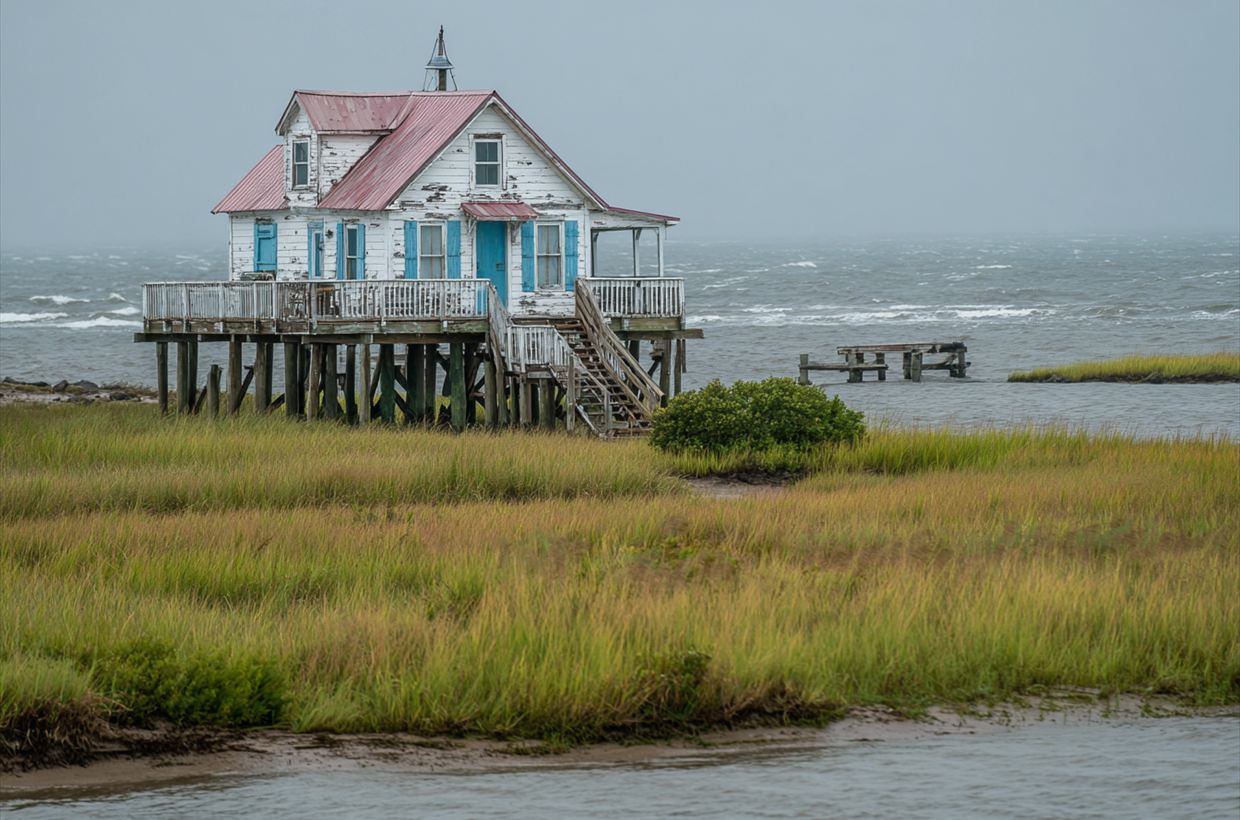
Along Trinity Bay, the San Jacinto River and low parts of the Baytown area, many houses sit on piers or stilts. Some were built that way; others were raised after a flood. Elevation is one of the best defenses against rising water, because it keeps flood water below the living space. It doesn't make a house waterproof, though. It changes where water damage tends to start.
What Elevation Protects
- living space above the expected flood level
- flooring, drywall and furniture that would otherwise sit in flood water
- often, lower flood insurance premiums, depending on the elevation
What Still Gets Wet
| Area | How water reaches it |
|---|---|
| Under the house | Flood water passes under; anything stored there gets wet |
| Ductwork and pipes below the floor | Exposed to flood water and to freezes |
| Ground-level enclosures | Garages, storage or rooms built under the house take water |
| Walls and windows | Wind-driven rain gets in around frames in a storm |
| Ceilings | Rain through a damaged roof reaches the same as any house |
| Stairs and entries | Water tracks in, or runs in under doors |
Under the House
If flood water passed under a raised house, check the ductwork, insulation under the floor, plumbing and any wiring for damage, and clean out silt and debris. Insulation under the floor that got wet usually comes out. Ground-level enclosures are treated like any flooded room: wet materials out, clean, dry.
Inside the House
Wind and rain are the common storm calls for raised homes. Water gets around window frames and doors on the side facing the storm, and through any opening the wind made in the roof. See hurricane and storm rain damage. Plumbing leaks inside a raised home can drip through the floor to the space below, so readings under the floor matter too.
Insurance
Elevation affects flood insurance pricing, and flood coverage for areas below the elevated floor is usually limited. Read your policy and ask your agent what's covered under the house. FloodSmart.gov explains how elevation affects flood coverage. See also windstorm, flood or homeowners.
Why Some Homes Were Raised
Low ground around Baytown sank for decades as groundwater was pumped out. That's part of why homes that were once high enough no longer are. See subsidence and Brownwood.
What to Check After a Storm
- the space under the house: debris, standing water, damaged insulation or ductwork
- the stairs and entry: water tracked or blown in
- walls and windows on the side that faced the storm
- the ceiling and attic, if wind damaged the roof
- plumbing and wiring under the floor, if flood water reached them
Photograph each before anything is cleaned up.
Raising a House After It Floods
Some Baytown-area owners raise a house after a flood, sometimes with help from grant programs run through local governments. It's a large project with its own engineering and permits, and it's separate from water damage restoration. If you're considering it, the restoration work, drying and repairing the existing house, usually comes first, so the house is sound before it's lifted.
Questions
Does a raised home need flood insurance?
It's often still worth carrying. Elevation reduces risk and premiums but doesn't remove the risk.
Is the space under my raised house covered by flood insurance?
Coverage below the elevated floor is usually limited. Check your policy.
What gets damaged most often in a raised home?
The space and equipment under the house in floods, and walls and windows in wind-driven rain.
Where Raised Homes Are Common
Raised homes are common in Beach City, Highlands, Huffman and Crosby.

Why Parts of Baytown Sit Lower Than They Used To
Subsidence, Brownwood and the Nature Center.
Windstorm, Flood or Homeowners: Which Policy Covers Which Water
The three policies, and why the county line matters.